On 13 August 1977, approximately 4,000 residents of Lewisham and surrounding areas confronted the National Front in what became known as the Battle of Lewisham. The event marked a pivotal moment in British anti-fascist history and remains a defining chapter in the borough's story of community resistance.
The March That Sparked the Conflict
The National Front, a far-right political organisation, announced plans to march from New Cross to Lewisham. The group's national organiser, Martin Webster, stated their purpose in stark terms: "We believe that the multi-racial society is wrong, is evil and we want to destroy it."
The proposed route cut through some of Lewisham's most diverse neighbourhoods. Around 500 National Front members gathered for the march, but they would face opposition far greater than their numbers.
Local Organisations Mobilise
Three main groups coordinated the counter-demonstration. The All Lewisham Campaign Against Racism and Fascism (ALCARAF), supported by local trade unions and community organisations, called for a peaceful demonstration gathering at Ladywell Fields. The Ad Hoc Organising Committee urged activists to occupy the National Front's planned meeting point at Clifton Rise in New Cross. Meanwhile, the Anti Racist/Anti-Fascist Co-ordinating Committee (ARAFCC), a London-wide federation, mobilised activists and called for physical attempts to stop the march.
The response demonstrated the strength of community organising in Lewisham. Local residents, trade unionists, students, and anti-racist campaigners united across organisational lines to oppose the far-right presence in their borough.
Confrontation on the Streets
Approximately 5,000 police officers were deployed to manage the demonstration, one of the largest policing operations of the era. The confrontation began early as anti-National Front demonstrators gathered at Clifton Rise and Achilles Street in New Cross.
The ALCARAF march proceeded from Ladywell Fields to Loampit Vale, though many participants continued toward New Cross Road. As the National Front attempted to proceed, marchers were met with bricks, smoke bombs, bottles, and wood thrown by counter-protesters. At one point, demonstrators broke through police lines to attack the rear of the National Front march, capturing and burning banners.
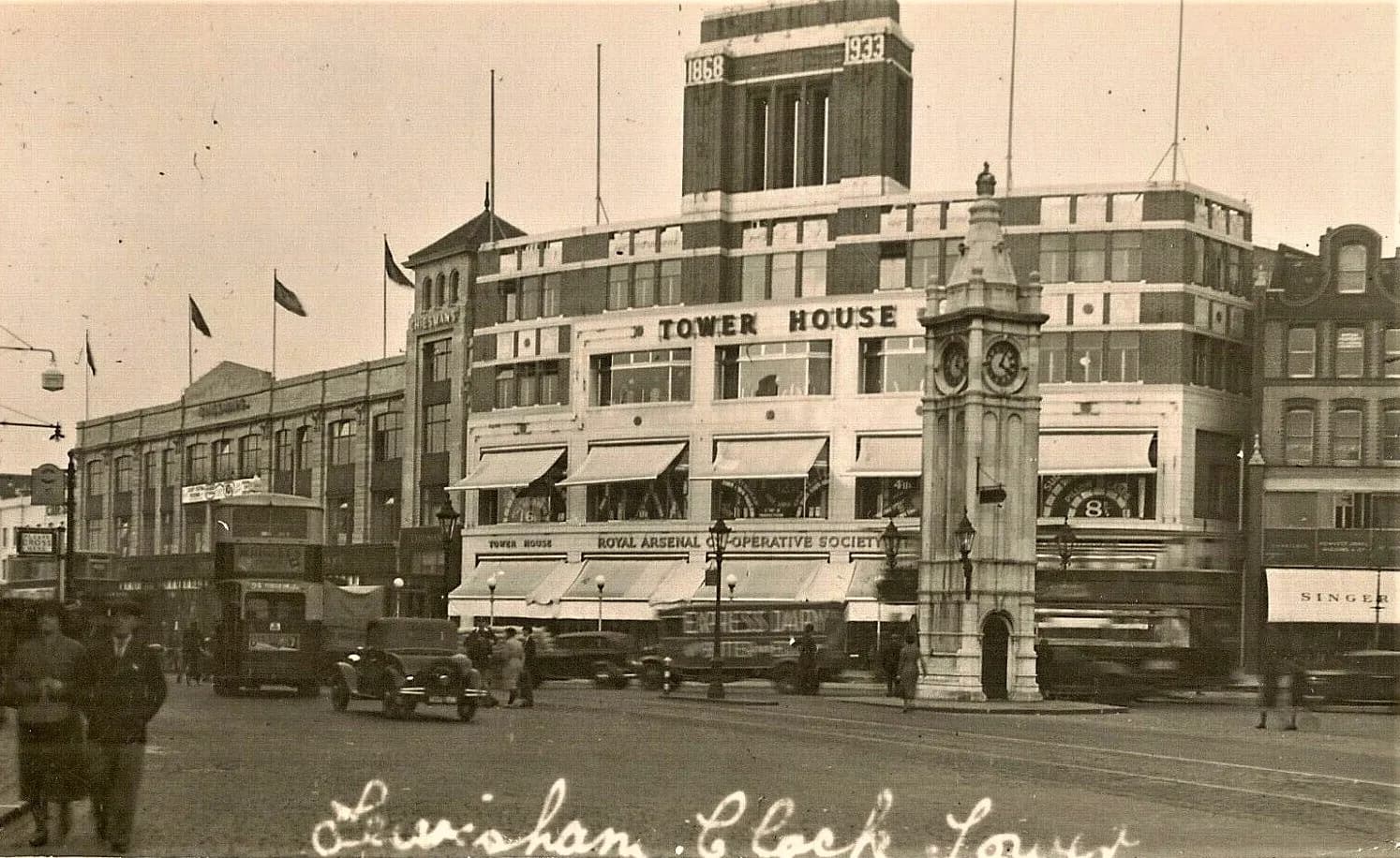
The confrontation spilled into Lewisham town centre, where demonstrators blocked the High Street. Police used riot shields for the first time on the British mainland, along with baton charges and mounted police units. For a period, police lost control of the town centre around the Clock Tower, an area briefly dubbed the "People's Republic of Lewisham Clock-Tower." Minor looting and a vehicle fire were reported before order was restored.
Casualties and Arrests
The violence resulted in significant injuries on all sides. A total of 111 people were injured during the confrontation, including 56 police officers, 11 of whom required hospital treatment. Police made 214 arrests.
Aftermath and Legacy
The Battle of Lewisham represented a watershed moment in British protest history. It marked the first deployment of riot shields by police on the UK mainland, signalling a shift in public order policing tactics.
For Lewisham, the event became embedded in local identity as a moment of community solidarity against racism. The borough would continue to develop as one of London's most diverse and outward-looking areas.
Commemorations
The legacy of 13 August 1977 continues to be recognised in Lewisham. In 2017, a maroon plaque was unveiled at 3 Batavia Mews, on the corner of New Cross Road and Clifton Rise, marking the site where the confrontation began. Councillor Joan Millbank led the unveiling ceremony.
In October 2019, a public artwork commemorating the Battle of Lewisham was installed on Lewisham Way in New Cross. The piece features civil liberties campaigner Darcus Howe, who played a significant role in anti-racist activism during the period.
These memorials serve as reminders of the day when thousands of Lewisham residents stood together to reject extremism and defend their community's values.